
Kedar Premium Tea – Best Quality Tea Brand in India
Table of Contents
ToggleIntroduction: Unveiling the World of Kedar and Kedar Tea
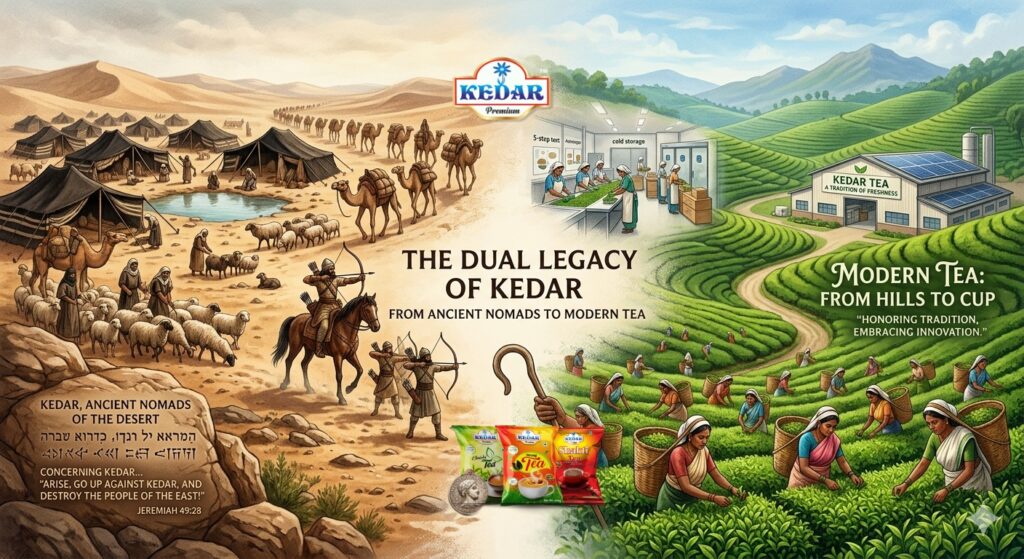
The name Kedar carries a rich tapestry of history, echoing from the ancient deserts of Arabia to the bustling markets of modern India. It represents a fascinating duality: on one hand, an influential ancient tribe with a profound historical and biblical footprint, and on the other, a contemporary Indian brand, Kedar Tea, that has carved its niche in the vibrant world of beverages. As we delve into the narrative of Kedar, we uncover layers of heritage, tradition, and a modern commitment to quality and natural goodness. We explore how a name steeped in antiquity now signifies a promise of purity and flavor in our daily cups of chai.
Kedar's Ancient Heritage: Name, Tribe, and Influence
The story of Kedar begins in the ancient world, rooted in both biblical accounts and historical records. The name itself, “Kedar,” is believed to be derived from the Hebrew word “qadar,” meaning “dark” or “swarthy.” This interpretation may allude to the complexion of the people or the characteristic dark goat’s hair used to construct their nomadic tents. Alternatively, its Arabic root suggests meanings of “power” or “ability,” hinting at the tribe’s formidable presence in the ancient Near East.
The Kedarites were a significant nomadic Arab tribe, tracing their lineage back to Kedar, the second son of Ishmael, who was himself a son of Abraham and Hagar. This ancestry placed them firmly within the broader Ishmaelite tribes, frequently mentioned in the Old Testament due to their interactions with Israel and other neighboring peoples.
A Nomadic Lifestyle in the Arabian Desert
The Kedarites primarily inhabited the vast expanse of the Arabian Desert, specifically the northwestern region of the Arabian Peninsula, extending into eastern Syria and present-day Jordan. Their existence was defined by a nomadic, pastoral lifestyle. They were renowned for raising large herds of sheep, goats, and camels, which formed the backbone of their economy and sustenance. Their dwellings were typically tents, often made of black goat’s hair, a detail referenced in biblical texts like the Song of Solomon, where the Shulammite girl likens her swarthy appearance to “the tents of Kedar”. While largely nomadic, some Kedarites also established “settlements” or “villages,” suggesting a degree of seasonal or semi-permanent habitation.
Economic and Military Prowess
The Kedarites were not merely desert dwellers; they were also active participants in the ancient Near Eastern economy. They were known for their wealth and engagement in trade, particularly in livestock such as lambs, rams, and goats, which they supplied to major trading centers like Tyre. This commercial activity underscores their economic significance in the region.
Beyond trade, the Kedarites were formidable warriors, particularly skilled in archery. This military capability made them both powerful opponents and valuable allies in the conflicts that shaped the ancient world. Their might in battle is even alluded to in prophetic literature, such as Isaiah 21:16-17, which speaks of the decline of Kedar’s glory and the reduction of its warriors.
Historical Interactions and Legacy
The Kedarite tribal confederation emerged as a significant polity in the 9th century BCE, expanding its territory across northern Arabia. Their history is marked by complex interactions with powerful empires:
Assyrian Empire:
The Kedarites frequently clashed with the Neo-Assyrian empire, initially as enemies and later as vassals. Assyrian records from the 8th century BCE onward document these interactions, with kings like Tiglath-Pileser III and Ashurbanipal recording their campaigns against the Kedarites. Assyrian accounts sometimes used “Kedarites” almost synonymously with “Arabs” as a whole, indicating their prominence.
Babylonian Empire:
Following the destruction of the Neo-Assyrian empire in 612 BCE, the Kedarites leveraged the power vacuum, controlling a vast territory between the Sinai and the Persian Gulf. However, they later faced conquest by Nebuchadnezzar, king of Babylon.
Persian Period:
During the Persian era, Kedar continued as a client state, with Kedarites serving as vassal rulers in southern Jordan and the Negev Desert.
The Kedarites also hold a significant place in Arab traditions, where Kedar is regarded as an ancestor of Adnan, and, consequently, an ancestor of the Islamic prophet Muhammad. This connection imbues the name with enduring cultural and religious significance. Today, the city of Qeydar in Iran is named after him and houses a 14th-century tomb dedicated to him, recognized as a national monument. The enduring presence of Kedar in historical, biblical, and cultural narratives highlights its deep and lasting influence.
Kedar Tea: A Modern Indian Brand's Commitment

Shifting from ancient sands to contemporary culture, the name Kedar re-emerges in the form of Kedar Tea, a prominent modern Indian brand. Operated by S. K. Trading, Kedar Tea has established itself as a top tea brand in Haryana, committed to delivering authentic and high-quality tea experiences across India.
The Philosophy: Purity, Quality, and Tradition
At its core, Kedar Premium Tea is driven by a simple yet powerful philosophy: to provide the best chai experience in every cup. This commitment is deeply rooted in a passion for crafting authentic, flavorful, and heartwarming Indian chai that respects tradition while embracing modern preferences.
The brand’s dedication to quality begins at the source. Kedar Tea sources only the finest tea leaves and aromatic spices, working closely with trusted farmers and ethical suppliers to ensure purity and freshness. A cornerstone of their promise is the strict avoidance of artificial colors, flavors, or preservatives, ensuring that each blend maintains the natural essence of tea and delivers authentic taste and health benefits. This commitment reflects a belief that natural teas are richer in antioxidants and better for overall well-being.
Furthermore, Kedar Tea is dedicated to sustainability and ethical sourcing practices, collaborating with partners to ensure their teas are grown and harvested in environmentally responsible ways. This holistic approach underscores their commitment not just to taste, but also to health and the planet.
The Product Range: Flavors for Every Palate
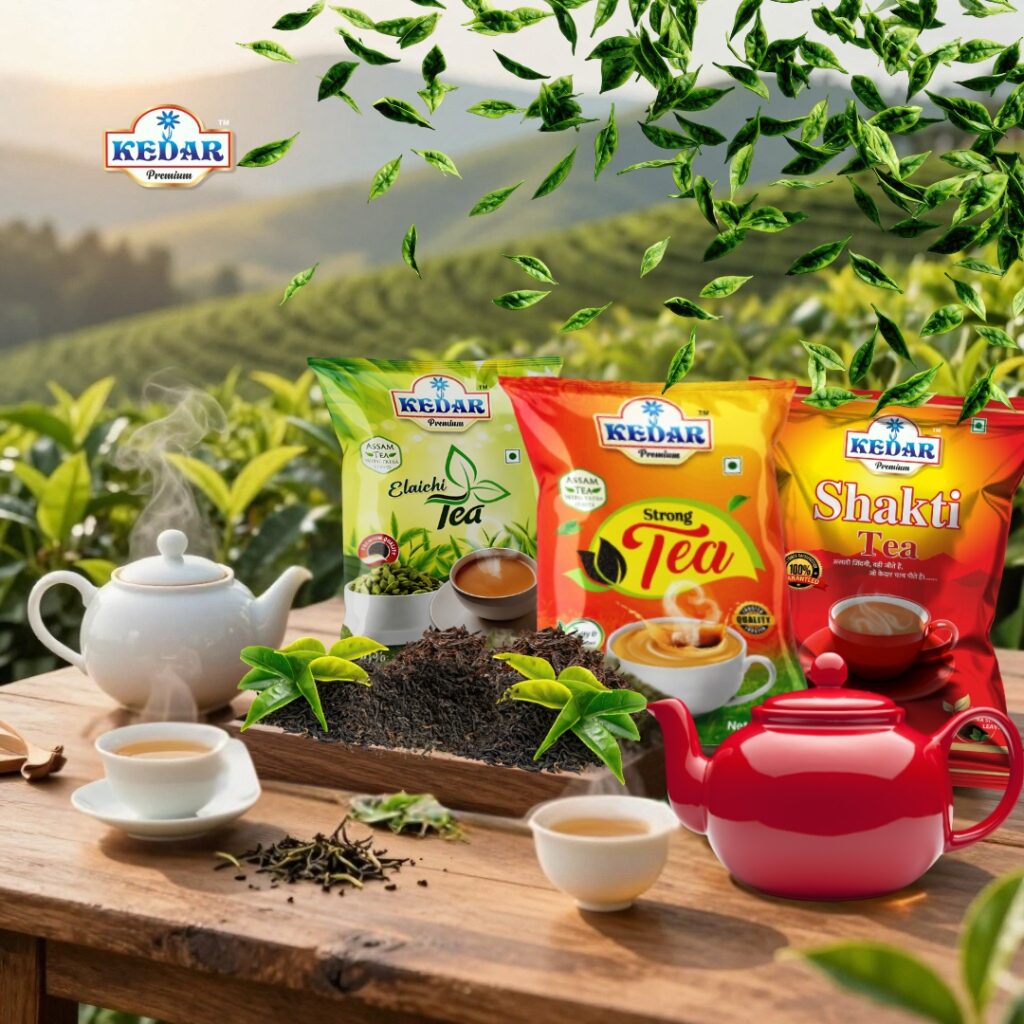
Kedar Tea offers a diverse and expanding range of teas, catering to various tastes and preferences. Their flagship products include:
Kedar Strong Tea:
This blend is celebrated as India’s favorite “kadak chai” (strong tea), known for its bold, rich taste and deep cultural ties. Made from handpicked leaves from India’s best tea gardens, it undergoes a careful process to bring out deep, robust flavors that honor tradition and quality. It’s a premium tea boasting high-quality, expertly blended tea leaves, beloved for its ability to provide a satisfying, energizing start to the day.
Kedar Elaichi Tea:
A premium cardamom tea, this blend infuses high-quality tea leaves with the natural goodness of real cardamom (elaichi). It delivers a refreshing mix of sweet and spicy notes, crafted for an authentic Indian chai experience. Beyond its irresistible aroma and taste, Kedar Elaichi Tea is also valued for its comforting and digestive benefits, a property well-known in Ayurveda. It’s a blend that bridges generations, enjoyed by young and old alike.
Kedar Shakti Tea:
Positioned as a powerful herbal energy tea, Kedar Shakti Tea is crafted from premium Indian herbs and natural spices. This caffeine-free blend offers a clean, sustained energy boost without artificial ingredients, awakening the senses with its bold, earthy flavor. Rich in antioxidants, it supports mental clarity, physical stamina, immunity, and overall well-being, aligning with ancient Ayurvedic traditions for holistic wellness. In addition to these core offerings, Kedar Tea also features other specialized blends like Kedar Diamond Tea, Kedar Gold Tea, Kedar Kadak Tea, and Kedar Premium Tea. The brand also seems to be associated with a broader range of natural herbal teas under “Kedars Product” or “Kedar Health,” including Butterfly Pea Flower, Chamomile, Hibiscus, Guava Leaves, and Marigold teas, emphasizing antioxidant-rich, caffeine-free, and health-enhancing properties.
Ensuring Freshness and Quality Through Rigorous Processes
Kedar Tea employs a stringent multi-step approach to ensure that every cup delivers unmatched flavor, aroma, and purity:
5-Step Quality Testing:
Every batch of tea undergoes a rigorous 5-step testing process to guarantee purity, freshness, and great taste from farm to cup.
Optimal Storage Conditions:
Tea can become stale when exposed to moisture, light, oxygen, or heat. Kedar Tea meticulously stores its products in dry, clean, and temperature-controlled cold storage facilities.
Light Protection:
Teas are handled in low-light conditions to prevent strong light from altering the natural composition of tea leaves, thus preserving their flavor, aroma, and health benefits.
Vacuum Packing:
To combat the spoilage caused by oxygen, Kedar Tea utilizes vacuum packing, a method that locks in freshness, flavor, and nutrients for an extended period.
This comprehensive quality control and packaging strategy ensures that consumers receive a consistently fresh and delightful product. The brand’s packaging is also designed for convenience, ensuring the chai remains aromatic and delightful whether at home, in the office, or on the go.
Market Presence and Community
Kedar Tea has successfully established a strong presence in the Indian market, particularly in Haryana, and offers Pan- India delivery. The brand views itself as more than just a tea provider; it aims to be a community of chai lovers, united by a shared appreciation for authentic taste, rich tradition, and everyday comfort. Through their products, they aspire to deliver moments of calm, connection, and joy, making Kedar Tea a part of Indian households, memories, and traditions.
Here, we address some common questions about Kedar and Kedar Tea, bridging the ancient and modern narratives.
Q1: What is the historical significance of the name Kedar?
The name Kedar holds profound historical significance, primarily referring to an ancient Arab tribe descended from Kedar, the second son of Ishmael. This tribe was prominent in the Arabian Desert from at least the 9th century BCE, known for its nomadic lifestyle, trade in livestock, and military prowess as archers. The Kedarites played a role in biblical narratives and engaged in conflicts and alliances with major ancient empires like the Assyrians and Babylonians. In Arab traditions, Kedar is also considered an ancestor of the Islamic prophet Muhammad.
Q2: What types of tea does Kedar Tea offer?
Kedar Tea offers a diverse range of premium Indian teas, with its primary categories being Kedar Strong Tea, Kedar Elaichi Tea, and Kedar Shakti Tea. Kedar Strong Tea is known for its robust, traditional “kadak chai” flavor, while Kedar Elaichi Tea provides a refreshing cardamom-infused experience with digestive benefits. Kedar Shakti Tea is a caffeine-free herbal blend designed to boost energy, immunity, and overall well-being through natural herbs and spices. The brand also offers other varieties like Kedar Diamond, Gold, and Premium teas, as well as a range of single-ingredient herbal teas such as Butterfly Pea, Chamomile, and Hibiscus.
Q3: How does Kedar Tea ensure the quality and freshness of its products?
Kedar Tea employs a comprehensive quality assurance process to guarantee freshness and superior taste. This includes a 5-step quality testing process for every batch, sourcing ingredients from trusted farmers and ethical suppliers, and strictly avoiding artificial colors, flavors, or preservatives. To maintain freshness, their teas are stored in dry, clean, and temperature-controlled cold storage facilities, handled in low-light conditions, and vacuum-packed to protect against moisture, light, and oxygen exposure.
Q4: Is Kedar Tea committed to sustainable practices?
Yes, Kedar Tea emphasizes a commitment to sustainability and ethical sourcing. The brand works closely with its partners to ensure that its teas are grown and harvested using environmentally responsible methods. This dedication extends to their philosophy of delivering natural and pure products, reflecting a broader concern for health and the environment.
Conclusion: The Enduring Narrative of Kedar
The journey through the world of Kedar, Kedar Tea reveals a compelling narrative that spans millennia and continents. From the ancient Kedarites, a powerful nomadic tribe whose influence shaped the history and culture of the Arabian Desert, to the modern Kedar Tea brand, a beacon of quality and tradition in India’s vibrant tea market, the name resonates with strength, heritage, and a commitment to excellence.
The ancient Kedarites left an indelible mark through their pastoral life, their trading networks, their military prowess, and their enduring presence in biblical texts and Arab genealogies. Their story is one of resilience and adaptation in harsh desert environments, a testament to the enduring spirit of ancient peoples.
Today, Kedar Tea carries forward a different, yet equally significant, legacy. It embodies a modern commitment to natural purity, rigorous quality control, and a passion for crafting authentic Indian chai. With its diverse range of strong, spiced, and herbal blends, Kedar Tea has become a part of daily rituals and cherished moments for countless individuals.
Ultimately, the dual narrative of Kedar, Kedar Tea reminds us that names can carry profound meanings across time, evolving yet retaining an essence of their origin. It is a story of how an ancient heritage can inspire modern endeavors, connecting the past to our present, one flavorful cup at a time.

